
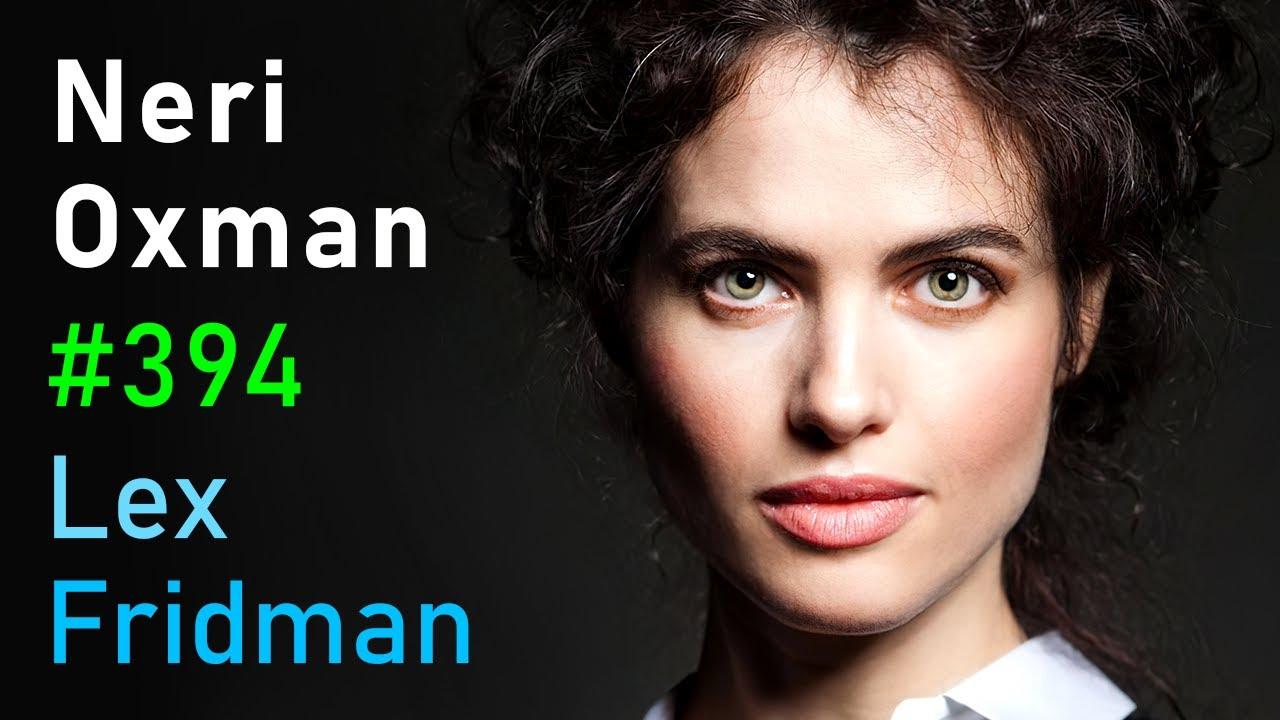
Neri Oxman: Biology, Art, and Science of Design & Engineering with Nature | Lex Fridman Podcast #394
Neri Oxman, a designer, engineer, scientist, and artist, explores the intersection of biology, art, and science in design and engineering.
She discusses her innovative approach to creating products in harmony with nature using computational design and synthetic biology, and shares her vision for a future where nature and technology work hand in hand.
Leveraging Computational Tools to Empower Nature
Creating large molecule models that can quantify and understand the language across all kingdoms of life could potentially empower nature to build better crops, increase biodiversity, and even help nature fix itself.
This showcases the potential of computational tools in augmenting nature’s inherent wisdom.
The Power of Cross-Disciplinary Collaboration
Oxman’s team comprises individuals from diverse disciplinary backgrounds, all of whom share a humanistic approach.
These include designers, mathematicians, computer scientists, mechanical engineers, synthetic biologists, microbiologists, chemists, architects, and roboticists.
Their collective aim is to reduce the dimensional mismatch between things made and things grown.
Creating an Interface between Nature and Technology
Oxman envisions a future where an interface between nature and computational tools could provide nature with the ability to adapt to changing conditions, such as animals knowing when to flee from a fire or plants increasing photosynthesis rates in the presence of a smoke cloud.
The Art of Templating
Oxman introduces the concept of ‘templating,’ which provides computational, material, and immaterial physical and molecular platforms that guide nature.
This raises the question of whether we can move from templating to a situation where the biological organism assumes agency by accessing the robotic code.
Empowerment in Nature
Nature seeks to increase the information dimension and reduce entropy, which mirrors what humans aspire to.
An agent is empowered if the entropy of the distribution of all of its states is high, while the entropy of the distribution of a single state given a choice, given an action is low.
Synthetic Apiary: A Controlled Environment for Bees
Oxman’s work on a synthetic apiary, a controlled environment designed for bees, has been successful in keeping bees alive and reproductive through the winter season.
This led to the idea of creating a new urban typology, an architectural typology of symbiosis of mutualism between organisms and humans.
I absolutely believe that there is so much to nature that we still have not leveraged, and we still have not understood, and we still haven’t… And so much of our work is designed, but a lot of it is science, is unveiling and finding new truths about the natural world that we were not aware before. – Neri Oxman
Everybody talks about intelligence these days, but I like to think that nature has kind of wisdom that exists beyond intelligence or above intelligence. And it’s that wisdom that we’re trying to tap into through technology. – Neri Oxman
Bees in Space
Oxman’s team sent bees to space as part of Blue Origin’s Blue Shepherd mission.
They created a life support system for the bees, providing them with all the conditions they needed, including pheromones associated with the queen bee.
The bees returned alive, reproductive, and continued to create comb.
The Ethical Stance on Working with Organisms
Oxman believes that their work should benefit both humans and the organisms they work with.
She strives to create a win-win situation where the organism flourishes as a byproduct of the project.
However, she acknowledges that there are gray areas in the ethical considerations of working with organisms, especially when it comes to genetic modification.


